

A Fastline Marketing Group Investigation
The Conversations No Dealer Wants to See
In Part 1, we shared what farmers say makes a great dealership. Those qualities win sales and build loyalty.
But there’s another side to the story. The warnings. The red flags. The “whatever you do, don’t buy from…” conversations happening on forums right now.
We scanned hundreds of these discussions too. And honestly? They’re more revealing than the positive ones.
When farmers warn each other about bad dealer experiences, they’re specific. They name behaviors. They describe situations. They explain exactly what went wrong and why they’ll never go back.
These aren’t complaints to customer service departments that get smoothed over. These are public warnings that influence dozens of future buying decisions. One bad experience becomes a story that spreads through farming communities like wildfire.

Why this matters for your dealership:
You might be doing nine things right. But if you’re doing one of these things wrong, you’re losing sales you don’t even know about.
Farmers research online before they visit. They read forums. They ask for recommendations in Facebook groups. If your dealership keeps coming up in negative conversations, those potential customers never make it to your lot.
This article isn’t meant to scare you. It’s meant to help you see the blind spots that might be costing you sales. Because unlike your competitors, you’re reading this. You’re paying attention. You have time to fix these issues before they damage your reputation.
Let’s look at the six major red flags farmers watch for.
The Six Deal Breakers That Kill Sales
1. Limited or Unresponsive Service
This is the number one complaint we found. Bar none. It came up more than every other issue combined.
When farmers can’t get service, everything else about your dealership becomes irrelevant.
What farmers are saying:
We found story after story of farmers who switched brands entirely because they couldn’t get timely service.
One farmer on Reddit wrote: “Our newer Deere tractors have constant problems. We had to wait weeks to get a dealer service appointment, and when the techs finally came, they couldn’t figure out the problem but still charged insane rates.”
Another described calling multiple times without getting a callback during harvest season. He ended up buying a different color tractor from a dealer who answered the phone.
In The Gazette, we found an article describing exactly how this plays out: “Delays due to a single dealer’s busy schedule lead to lost harvest days.”
Lost harvest days = lost money. Lots of it.

The compound effect:
Here’s what dealers don’t realize: When you’re too busy to serve a customer promptly, you don’t just lose that repair. You often lose that customer permanently.
And they don’t just stop buying from you. They tell their neighbors. They post on forums. They leave reviews. One slow service experience can influence 10-20 future buying decisions.
We saw this pattern repeatedly: “I waited 3 weeks for service from Dealer X, so I bought my next tractor from Dealer Y.”
Why this happens:
Most dealers aren’t trying to provide bad service. You’re understaffed, overbooked, or trying to cover too large a territory. We get it.
But from the farmer’s perspective, the reason doesn’t matter. Their crops are in the field. Weather is coming. They need help now.
What dealers must do:
This is non-negotiable. If you can’t provide responsive service, you’re in the wrong business.
Practical solutions:
- Hire more technicians. Yes, they’re expensive. Losing customers is more expensive.
- Extend hours during peak season. Planting and harvest are your Super Bowl. Staff accordingly.
- Offer mobile service. Going to the farm is faster than waiting for the tractor to come to you.
- Set realistic expectations. If you’re booked solid, be honest about timing. Many farmers will wait if you communicate clearly.
- Partner with other shops for overflow work when you’re swamped.
Marketing implications:
If your service is good, prove it with data:
- “Average response time: 24 hours during peak season”
- “Mobile service available for breakdowns during harvest”
- “Extended hours May-June and September-October”
If your service isn’t good, fix it before you market anything else. Because every ad dollar you spend will be wasted if farmers call and can’t get through.
2. Poor Availability of Parts or Manuals
The second major complaint: Farmers can’t get the parts or information they need to keep equipment running.
What we found:
On Kubota Forum and other sites, farmers complained about having to search online for manuals that dealers should provide. Others described waiting weeks for essential parts.
One farmer wrote: “I had to Google to find the service manual. The dealer said they didn’t have one available. That’s ridiculous for a $40,000 tractor.”
Another said: “Called about a part. Dealer said it would take 2-3 weeks to arrive. I found it online and had it in 3 days. What’s the point of the dealer?”
According to Syncron research we reviewed, difficulty obtaining diagnostic tools and service information due to manufacturer restrictions is a growing concern. But even beyond manufacturer restrictions, some dealers just don’t stock common parts or make manuals accessible.
Why this frustrates farmers:
Farmers are usually handy. Many prefer to do their own maintenance and simple repairs. But they need access to information and parts.
When dealers make this difficult – whether through poor inventory, slow ordering, or restricted access to manuals – farmers feel like they’re being forced into expensive dealer service for things they could handle themselves.
One farmer put it bluntly: “They want you dependent on them for everything. I own the tractor. I should be able to fix it.”
The workaround culture:
Here’s what happens: Farmers start finding parts elsewhere. They buy from online retailers, salvage yards, or cross-reference to aftermarket suppliers.
This means the dealer loses not just that parts sale, but the relationship. Once a farmer finds a reliable parts source that’s faster than their dealer, why would they come back?
What dealers must do:
Make parts availability a competitive advantage:
- Stock common wear items. Filters, belts, fluids, common sensors. These should always be on hand.
- Develop relationships with quick-ship suppliers for items you don’t stock.
- Provide manuals digitally. There’s no excuse in 2025 for farmers not to have access to service manuals.
- Train parts staff to cross-reference. If you don’t have the exact OEM part, can you source an alternative?
- Be honest about lead times. If something takes 3 weeks, say so upfront. Don’t make farmers wait to find out.
Marketing implications:
Parts availability is a selling point:
- “95% of common parts in stock”
- “Same-day or next-day parts ordering for items we don’t stock”
- “Complete service manuals provided with every sale”
- “Parts department open 6 days a week”
Show your parts inventory in photos or videos. Let farmers see your shelves stocked. Prove you’re serious about keeping them running.
3. Hidden Costs and Expensive Repairs
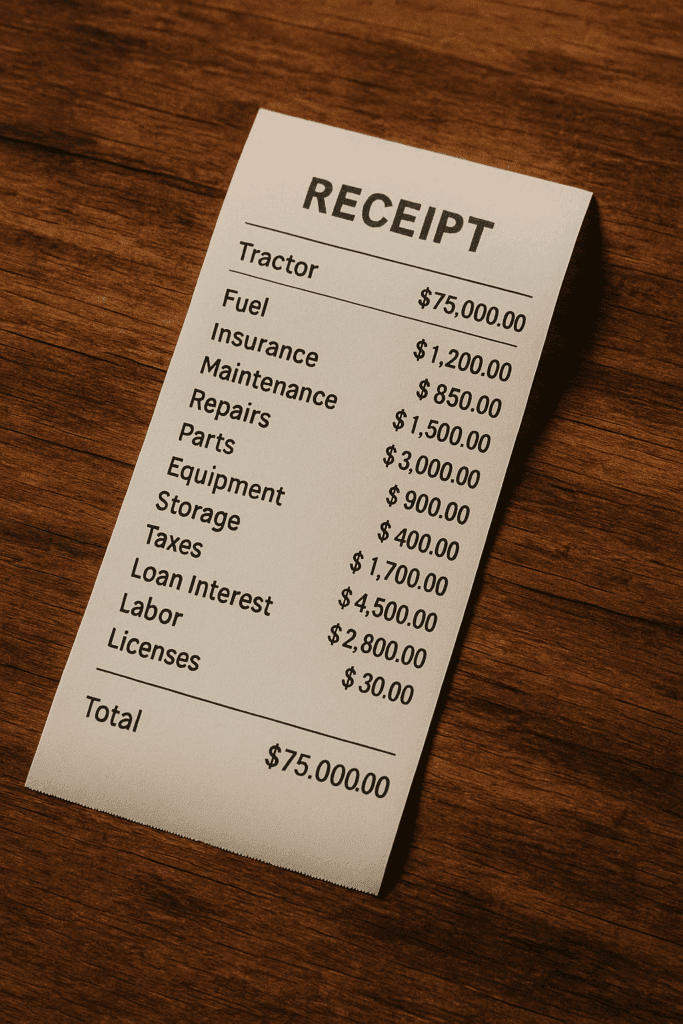
Nothing destroys trust faster than unexpected costs.
What farmers are saying:
We found consistent complaints about:
- Repair bills that came in way higher than quoted
- Parts that cost far more than expected
- Labor rates that seemed excessive
- Fees for diagnostics that didn’t even solve the problem
On Reddit, one farmer wrote: “They charged me $1,700 for a sensor replacement that took maybe an hour. When I questioned it, they acted like I was being unreasonable. I’ll never go back.”
Another described: “Brought it in for a check-up. Got a bill for $800 for stuff I didn’t authorize. They said it ‘needed’ to be done. Maybe it did, but you should have called me first.”
The pattern is clear: Farmers expect transparent pricing and clear communication before work is done.
The proprietary systems problem:
We also found frustration with brands that have expensive proprietary maintenance systems. Farmers specifically mentioned John Deere’s DEF systems, electronic sensors, and software that requires dealer-only tools to service.
These systems aren’t necessarily bad. But when they fail and cost thousands to fix, farmers feel trapped.
One farmer’s experience: “DEF pump went out. $3,000 to replace. On a tractor that’s only 2 years old. This is why people hate modern equipment.”
Why this matters:
Agricultural equipment is already expensive. Farmers budget carefully. Surprise costs throw off their entire financial planning.
When repair bills come in higher than expected, farmers don’t just get upset about that bill. They start questioning the total cost of ownership. Is this brand/dealer combination going to drain my wallet for years to come?
What dealers must do:
Radical transparency on costs:
- Always quote before you repair. No exceptions. Even if it takes an extra day to diagnose and quote properly.
- Break down costs clearly. Show parts cost, labor hours, shop rate. Let farmers see what they’re paying for.
- Call about anything additional. Found another problem while in there? Call before fixing it.
- Post your labor rates publicly. Don’t make farmers wonder. Put it on your website.
- Explain why things cost what they cost. OEM parts are expensive? Explain why you recommend them over aftermarket.
Build trust through honesty:
One dealer we work with started sending detailed quotes with photos before every repair. “Here’s the broken part. Here’s what we recommend. Here’s exactly what it will cost.” Customer complaints dropped to nearly zero.
Marketing implications:
Turn your transparency into a selling point:
- “No surprises – we quote every repair before starting work”
- “Detailed invoices showing exactly what you’re paying for”
- “Our labor rates: $XXX/hour – posted publicly because we believe in transparency”
Make trust a key part of your brand identity.
4. Overly Complex Diagnostic Systems
This is the right-to-repair issue that’s boiling over in farming communities.
What we’re seeing:
Farmers are increasingly frustrated with equipment they can’t diagnose or repair themselves because of proprietary software locks.
The Gazette article we reviewed stated it clearly: “Even with right-to-repair agreements, tools provided to farmers can be more complex than those given to dealers, forcing them back to the dealership.”
On forums, farmers describe situations where they know what’s wrong, have the replacement part, and could fix it in 30 minutes – but they can’t because the tractor’s computer won’t allow it without dealer software.
One farmer wrote: “The computer stuff makes it impossible to fix ourselves. A sensor throws a code, and we can’t even reset it without paying the dealer $150 just to plug in their laptop.”
The emotional impact:
This isn’t just about money. It’s about autonomy and respect.
Farmers are independent by nature. They’ve been fixing their own equipment for generations. Being locked out of their own tractors feels like a violation of ownership.
One Ontario farmer explained his brand choice this way: “No way I’d buy a JD unit after reading about the ‘you don’t OWN the tractor’s computer’ crap. I went with Kubota specifically because they don’t lock me out.”
That’s a sale lost entirely due to software policies.
The legal landscape:
Right-to-repair is becoming a legal issue. The FTC and several states have sued manufacturers over repair restrictions. Farmers are paying attention to these lawsuits and choosing brands accordingly.
What dealers can do (yes, dealers can help):
This is partly a manufacturer issue, but dealers have influence:
- Advocate to manufacturers for more open diagnostic systems. You’re on the front lines. You see the frustration daily. Push back.
- Be transparent about limitations. Tell customers upfront what they can and can’t service themselves.
- Offer diagnostic services fairly. If a farmer can fix it themselves but just needs a code cleared, charge reasonably or do it free as a goodwill gesture.
- Provide as much information as you’re allowed. Some dealers share diagnostic info and help farmers work around restrictions. Legal? Check with your lawyers. But farmers appreciate it.
Marketing implications:
If you sell brands with more open systems, market it:
- “Technology that helps you, not locks you out”
- “You own it, you can fix it”
- “Diagnostic information included with every sale”
If you sell brands with locked systems, acknowledge it honestly and explain your support:
- “Yes, some repairs require our diagnostic tools. Here’s our commitment to fast, fair service when you need us.”
Don’t pretend the issue doesn’t exist. Farmers know it does.
5. Pushing Unsuitable Equipment
This red flag came up in interesting ways. Farmers warned each other about dealers who prioritize making a sale over finding the right fit.
What farmers described:
The “sold up” problem is real. Dealers suggest tractors that are larger, heavier, or more expensive than what the customer needs.
On Reddit, experienced farmers warned newcomers: “Watch out for dealers who try to sell you more tractor than you need. A 50HP is plenty for 10 acres. Don’t let them talk you into 75HP just because they have one on the lot.”
Another wrote: “Dealer kept pushing attachments I didn’t want. I said I just needed the tractor and loader. He made it seem like I was making a mistake. I bought from someone else who listened.”
The mismatched equipment problem:
Farmers also described dealers recommending equipment that didn’t match their actual needs:
- Too much tractor for their acreage
- Wrong type of tractor for their tasks
- Attachments that won’t work well with their planned uses
- Features they’ll never use but add thousands to the cost
Why this backfires:
Short-term, overselling might increase the sale. Long-term, it destroys trust and creates unhappy customers.
That farmer who bought more tractor than they needed? They’re not coming back for their next purchase. And they’re telling their neighbors about the experience.
What dealers must do:
Train your sales team to truly consult, not just sell:
- Ask questions first. What do you need to do? How many acres? What tasks? How often?
- Match equipment to needs. Sometimes the right answer is a smaller, less expensive model.
- Explain the reasoning. “Here’s why I recommend this model for your situation…”
- Be willing to talk people down. “Actually, you don’t need that upgrade. Save your money.”
The long-term advantage:
When you help a farmer buy the right equipment (even if it’s less expensive), you create a customer for life.
They come back for their next purchase because they trust you put their interests first. They refer their neighbors because you’re honest.
That’s worth more than squeezing an extra $5,000 out of one sale.
Marketing implications:
Make your consultative approach a key message:
- “Right-sized equipment recommendations – we help you buy what you need, not what we want to sell”
- “Free equipment matching consultation”
- “Our sales team gets paid the same whether you buy big or small – we recommend what’s right”
Show testimonials from customers who bought smaller equipment and were happy with the recommendation.
6. Lack of Transparency About Known Issues
The final red flag: Dealers who hide or downplay known problems with equipment.
What farmers expect:
Every machine has issues. Farmers know this. They don’t expect perfection.
What they do expect is honesty about common problems so they can make informed decisions and plan for maintenance.
On Reddit forums, farmers specifically warned each other about dealers who failed to disclose:
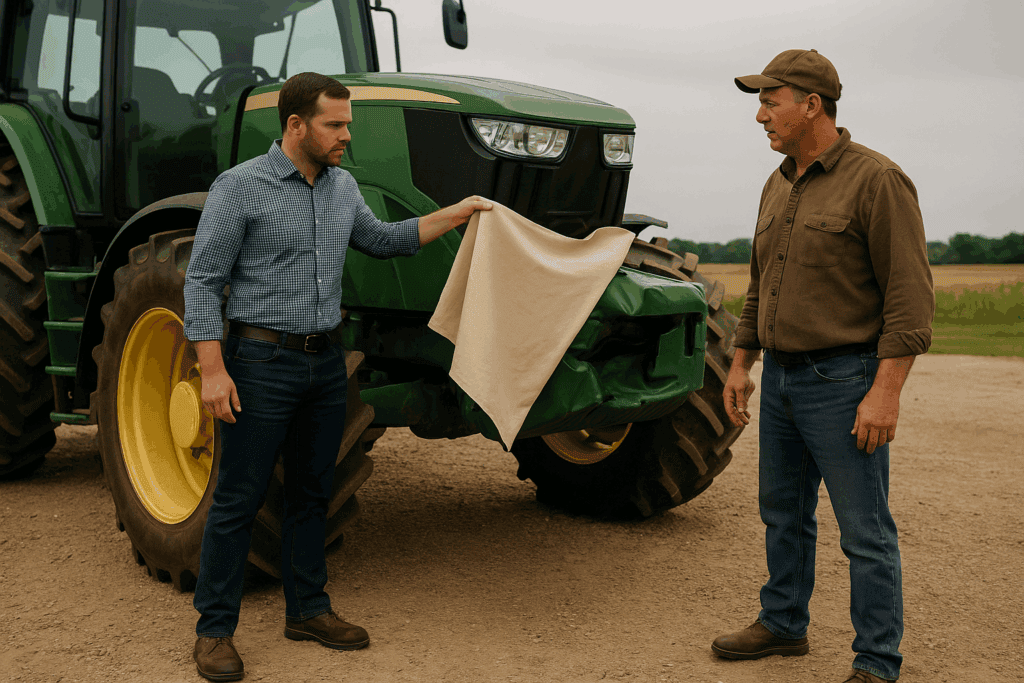
- Belt or bearing issues in first-year production models
- Fuel pump failures on certain models
- Head gasket issues around 3,000 hours
- Transmission quirks that require specific maintenance
- Known sensor problems
The discovery problem:
When farmers discover issues the dealer knew about but didn’t mention, trust evaporates instantly.
One farmer wrote: “Three months after buying, I found out there’s a known issue with the hydraulic pump on this model year. My dealer never mentioned it. They had to know. I feel like I was lied to.”
That feeling – that the dealer knew and didn’t tell them – is devastating to the relationship.
The Kubota baler example:
We found an interesting counter-example. Early Kubota balers had some bearing and belt issues in the first model year. But we found farmers praising Kubota’s response: “Kubota acknowledged the problems and took care of them very well under warranty.”
The company was transparent, fixed issues promptly, and improved later models. Farmers appreciated the honesty and support.
That’s how you handle known issues. Not by hiding them, but by acknowledging them and showing how you’ll support customers through them.
What dealers must do:
Build disclosure into your sales process:
- Know your equipment’s weaknesses. Stay informed about common issues with models you sell.
- Mention them proactively. “This is a great tractor. The one thing to know is [common issue] around [X hours]. Here’s how we handle it…”
- Explain what’s covered under warranty. And what isn’t.
- Show how you support customers when known issues appear.
- Follow up after sale to check on potential problem areas before they become actual problems.
The trust paradox:
When you disclose a known issue during the sale, customers initially might worry. But after the sale, they trust you completely.
When you don’t disclose it, the sale might feel easier. But when they discover it later, they’ll never trust you again.
Which customer would you rather have?
Marketing implications:
Transparency builds brand:
- “We tell you everything about our equipment – the good and the things to watch for”
- “Known issues? We discuss them upfront so you’re never surprised”
- “Extended warranty options for known trouble areas – we’ve got you covered”
Turn honesty into a competitive advantage.
What This Means for Your Dealership
After scanning hundreds of conversations about bad dealer experiences, one theme stands out: Most of these problems are avoidable.
These aren’t farmers complaining about things beyond dealer control. They’re pointing out specific behaviors and policies that drive them away.
The good news:
If your competitors are making these mistakes and you’re not, you have a massive advantage.
Farmers talk to each other. When they ask “Where should I buy a tractor?” on forums, the responses mention specific dealers by name – good and bad.
Be the dealership whose name comes up with praise, not warnings.
The marketing opportunity:
Most dealers market features and prices. Very few market what farmers actually care about: Trust, transparency, and support.
If you can honestly say you avoid these red flags, that message should be everywhere in your marketing.
Not in vague terms like “great service.” In specific terms:
- “We quote before we repair – every time”
- “Parts in stock or sourced within 48 hours”
- “Equipment matched to your needs, not our inventory”
- “Full disclosure of known issues before you buy”
- “Mobile service during peak season”
- “Service response within 24 hours”
These specific promises address specific farmer concerns. That’s what converts shoppers to buyers.
The competitive landscape:
Your competitors probably aren’t reading articles like this. They’re not scanning forums to see what farmers really think. They’re running the same ads they’ve always run and wondering why customers aren’t as loyal as they used to be.
You have an advantage because you’re paying attention.
Bringing It All Together
In Part 1, we covered what farmers want from dealerships. In this article, we’ve covered what sends them running.
The combination gives you a complete picture:
What wins sales: Responsive service, transparency, strong support, accessible knowledge, demonstrations, and honesty about equipment.
What loses sales: Unresponsive service, poor parts availability, hidden costs, complex diagnostic restrictions, overselling, and lack of disclosure.
It’s that simple. And that hard.
The execution challenge:
Knowing what farmers want is easy. Consistently delivering it is the challenge.
That’s where marketing comes in. Not just advertising, but the complete customer experience you create from first contact through years of ownership.
How Fastline Marketing Group Helps
We don’t just tell you what farmers want.
We’ve been in agricultural marketing for two decades. We understand the industry, the equipment, and most importantly, the customers.
The difference:
Other agencies create ads. We create trust.
Other agencies sell features. We sell relationships.
Other agencies guess at what works. We know what farmers actually care about because we listen to them.
Ready to stand out for the right reasons?
If you want marketing that addresses what farmers genuinely want – and positions you as the dealer who gets it right – let’s talk.
Contact Fastline Marketing Group. Let’s build a marketing strategy based on what really matters to your customers.
This investigation was conducted by Fastline Marketing Group through analysis of farmer discussions across Reddit, OrangeTractorTalks, Kubota Forum, TractorByNet, news articles from The Gazette and Syncron, and other agricultural sources from 2024-2025. All insights are from real farmer conversations and reported industry trends.
