
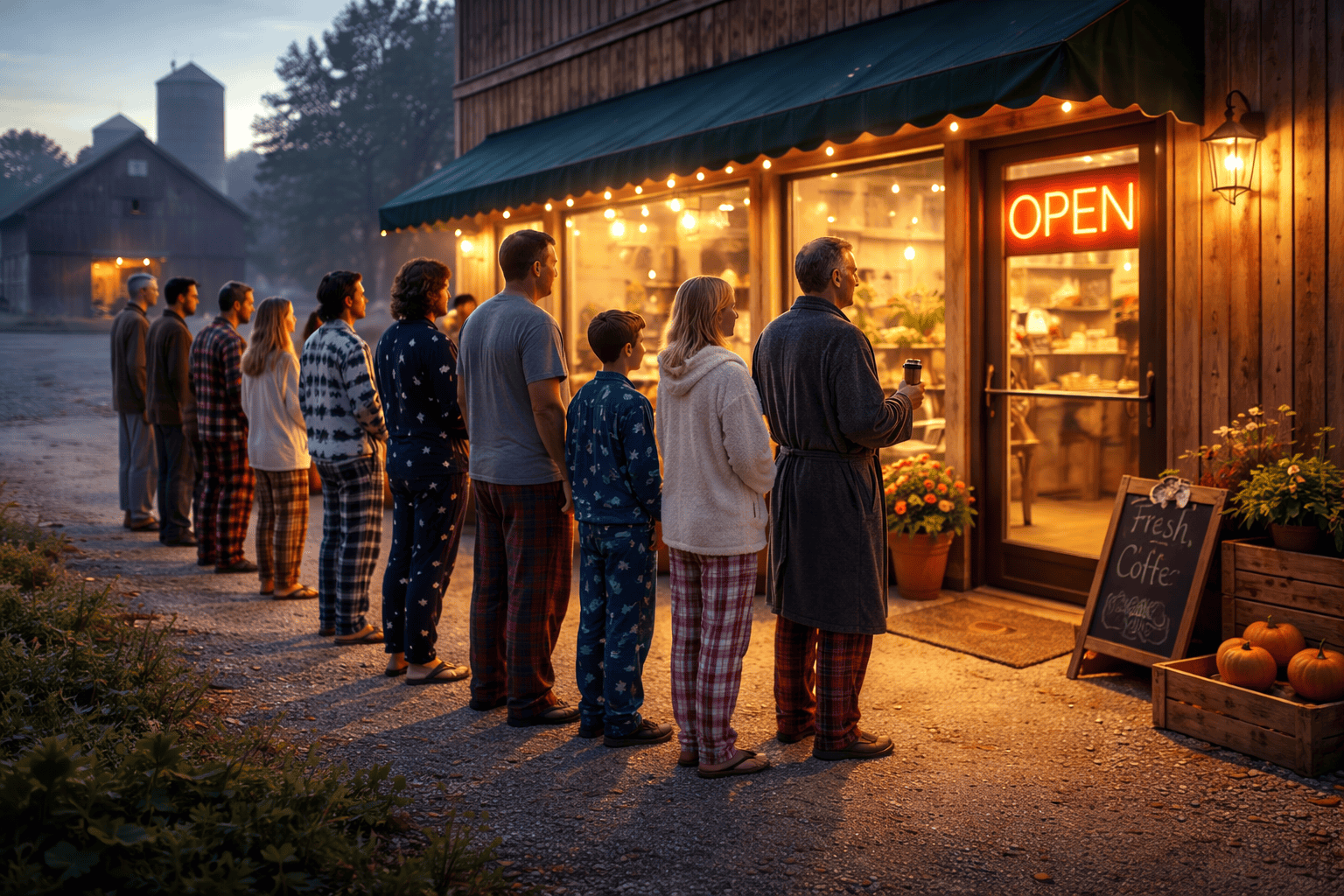
Remember when your website just had to exist? Yeah, those days are gone. Now your website needs to load faster than a teenager scrolling TikTok, look gorgeous on a phone screen the size of a playing card, and somehow convince someone in their pajamas on their couch at 11 PM that you’re the business they should call tomorrow morning.
Welcome to website design in 2026, where “good enough” left the building about five years ago.
This Blog in a Snapshot:
- The mobile reality: More than 50% of your visitors are on phones, if your site doesn’t work there, you’re toast
- Speed kills (sales): Every extra second your site takes to load costs you customers who’ve already moved on to your competitor
- Local matters: Working with designers near you means they understand your market, your customers, and your regional quirks
- DIY danger zone: That website builder you’re thinking about? It’s like trying to rewire your house with YouTube videos, technically possible, probably a bad idea
Why Your Website Probably Needs Help (No Offense)
Here’s the uncomfortable truth: if your website is more than three years old and hasn’t been updated, it’s hurting you more than helping you. It’s like showing up to do a dirty job in your Sunday best, technically functional, but sending all the wrong signals.
Let me paint you a picture of a situation we see all the time. We’ll call him Joe, not his real name, but a composite of conversations we’ve had with dozens of equipment dealers over the years.
Great dealer, 30 years in business, reputation solid as a tractor. But his website looked like it was built when dial-up was still a thing.
“We get calls,” he tells us, “but not like we used to.”
Here’s what we typically find: Sites taking 12 seconds to load on mobile. Twelve seconds. In internet time, that’s basically asking someone to wait while you go find a carrier pigeon to deliver your message. And when it finally loads? The “contact us” button doesn’t work on phones. Not sometimes. Never.
We’re not telling you this to shame anyone. We’re telling you because this happens constantly, and fixing it changes everything.
The Mobile-First World Doesn’t Care About Your Excuses
Everyone searches on their phones now. You do it. We do it. Your customers definitely do it.

When someone searches “equipment dealer near me” at 7 AM on their way to the field, they’re on their phone. When someone needs a part during lunch break, they’re on their phone. When someone’s comparing prices while sitting in their truck, they’re on their phone.
If your website doesn’t work perfectly on that phone, they’re calling your competitor before your site even finishes loading.
What “works on mobile” actually means:
- Loads in under 3 seconds (preferably under 2)
- Text is readable without zooming
- Buttons are big enough for actual human fingers
- Forms don’t make you want to throw your phone
- Images don’t take up your entire data plan
- Everything works. Not “kind of works” or “works if you turn your phone sideways”
The Great Website Speed Race Nobody Told You About
Google has decided that slow websites are bad websites. And since Google basically controls who gets found online, their opinion matters.
But here’s the thing, speed isn’t just about pleasing Google. It’s about not annoying your potential customers.
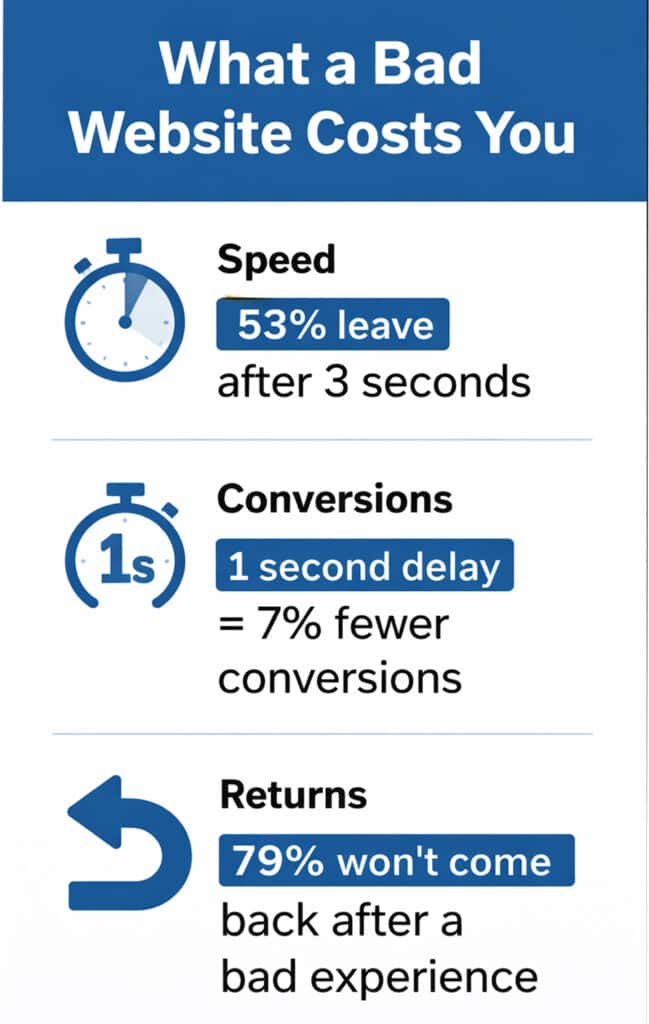
Real numbers from real research:
79% of shoppers who don’t like a site’s performance won’t come back
53% of mobile users leave sites that take longer than 3 seconds to load
A 1-second delay in loading time can reduce conversions by 7%
Translation: Your slow website is costing you actual money. Not “maybe” money. Actual “I was going to call you but your site took too long so I called someone else” money.
Why “Website Design Near Me” Isn’t Just About Convenience
When people search “website design near me” or “website mobile optimization near me,” they’re usually thinking it’s about convenience. Meeting in person. Being in the same time zone.
That’s part of it. But after 45 years doing this, we’ll tell you what really matters about working with local designers:
They get your market. A designer in Kentucky understands that your customers aren’t the same as customers in California. They know why timing matters around planting and harvest. They understand regional industries, local competitors, and what actually resonates with Midwest buyers.
They can see your operation. Zoom calls are fine for check-ins. But when someone’s designing your digital storefront, seeing your actual storefront, meeting your team, understanding your workflow—that context creates better results.
They move faster when you need them. Got a seasonal promotion you need live by Friday? Local designers can meet you Thursday to hash it out. Try doing that with an agency three time zones away who’s already clocked out for the day.
They have actual skin in the game. Their reputation in the local business community rides on your success. That’s different motivation than being client #247 at some national firm.
What Professional Website Design Actually Delivers
Let’s be specific about what you should expect when you hire professionals to build or rebuild your website:
A site that loads ridiculously fast. We’re talking 2 seconds or less. This requires technical optimization—compressing images without making them look bad, cleaning up code, choosing the right hosting, and about 50 other things that matter but sound boring.
Design that works everywhere. Your site should look great and function perfectly on every device: phones, tablets, laptops, desktop monitors. And we don’t mean “works okay if you squint.” We mean actually works.
Clear path to action. Every page should make it obvious what you want visitors to do next. Call you. Email you. Fill out a form. Schedule something. Buy something. Professional design guides people toward action without being pushy.
Built-in SEO foundation. Your website should be constructed in ways that help Google understand what you do and who you serve. This is technical stuff—proper heading structure, schema markup, meta descriptions, mobile optimization—that matters more than most people realize.
Actually represents your business. Cookie-cutter templates make you look like everyone else. Professional design captures what makes your business different and translates that into a website that feels like you.
The Hidden Cost of DIY Website Builders
We’re going to be honest about something: Those website builders you see advertised everywhere? The ones that promise you can build a “professional website in minutes”? They’re getting better. Some of them are actually pretty good now.
But here’s what they don’t tell you in the commercials:
“Easy to build” doesn’t mean “built right.” You can build a site quickly with those tools. But will it be fast? Will it be secure? Will it be optimized for search engines? Will it convert visitors into customers? That’s where things get complicated.
You’re still doing all the work. Time you spend fighting with a website builder is time you’re not running your business. Sure, you saved $2,000 on design. But how much did you lose in business opportunities while you spent 40 hours figuring out how to make the contact form work?
Support is usually terrible. Something breaks? Good luck getting help. Professional designers fix problems immediately. DIY platforms give you access to forums where you can ask questions that might get answered eventually.
They all look the same. Those templates are used by thousands of other businesses. Your differentiator isn’t your website design, it’s your business. But when you look exactly like 500 other sites, nobody knows that.
Real Talk About Website Investment
Quality website design costs money. Depending on complexity and features, you’re typically looking at $3,000-$15,000 for a professional small business website. Custom functionality, e-commerce, or complex integrations cost more.
That sounds like a lot. And it is until you think about it as your 24/7 salesperson who never calls in sick, never takes vacation, and works for you for years without complaining.
What you’re actually paying for:
- Strategy and planning before anyone writes a line of code
- Custom design that makes you stand out
- Professional development that works correctly
- Mobile optimization that actually functions
- SEO foundation so people can find you
- Security so you don’t get hacked
- Training so you can update basic content yourself
- Support when something goes wrong
The cheapest option usually costs more in the long run. Either because it doesn’t work right, or because you have to rebuild it in two years anyway.
The most expensive option might be overkill for where you are right now. Pay for what you need, not for features that sound cool but don’t serve your business goals.
Red Flags to Watch For When Hiring Designers
Not all website designers are created equal. Here’s what should make you walk away:
They promise “first page Google rankings” with your new website. That’s not how any of this works. A well-built website is necessary for good rankings, but it’s not sufficient. Rankings take ongoing work.
They don’t ask questions about your business. If they’re ready to give you a quote without understanding what you do, who your customers are, and what you’re trying to accomplish—they’re not designers, they’re order takers.
They can’t show you examples of their work. No portfolio? Big red flag. Portfolios full of sites that look identical? Also concerning.
They don’t discuss mobile optimization. If mobile isn’t part of the initial conversation, they’re living in 2010.
The price seems too good to be true. That $500 website? You’ll get $500 worth of website. Which is usually worth about $0 to your business.
AI and Websites: The New Thing Everyone’s Talking About
Quick side note about something you’re going to hear more about: AI search.
Tools like ChatGPT and Claude are changing how people find information online. While it’s still early days, having accurate and consistent business information across the web. Your name, address, phone number identical everywhere, services clearly described, contact information up to date makes it easier for any technology (AI or traditional search) to surface your business when people are looking for what you offer.
This is another reason professional website design matters. These technical details that most business owners never think about? They’re becoming more important, not less.
Curious about AI and how it is going to change search in the future check out our AI blog Series
Take Action Before Your Competition Does
Here’s the reality: Your competitors are upgrading their websites. The ones who haven’t yet will soon. Every day you wait is another day potential customers land on their modern, fast, mobile-friendly website while yours is still loading.
And here’s the thing about website projects, they take time. Not just the design and development (usually 6-12 weeks for a quality site), but the strategy, planning, content creation, and launch preparation.
Start that process in spring, and you’re ready for your busy season. Wait until you’re already slammed, and you’re trying to find time for website meetings while also running your business at full capacity.
Questions to ask yourself:
- When did someone last update our website? (If you don’t know, that’s probably bad)
- How does our site look on your phone right now? (Actually check it)
- How long does it take to load? (Count the seconds)
- Would you buy from a business with a website like yours?
If those answers make you uncomfortable, it’s time to search “website design near me” and have some conversations.
Ready to Build a Website That Actually Works?
We’ve been building websites for businesses like yours for longer than we care to admit. Long enough to know what works, what’s a waste of money, and how to create sites that turn visitors into customers without making you learn to code.
Let’s talk about your website needs. No pressure, no jargon, just an honest conversation about whether your current site is helping or hurting your business, and what to do about it.
About Fastline Marketing Group: For 45 years, we’ve helped businesses across Kentucky, Tennessee, Ohio, Missouri, Indiana, and beyond get more customers with less hassle. We started in agricultural marketing and learned that the best marketing doesn’t feel like marketing, it just works. Whether you need a website that doesn’t embarrass you, or a complete marketing strategy, we’ve probably seen your situation before and know how to fix it. Talk to us.
