
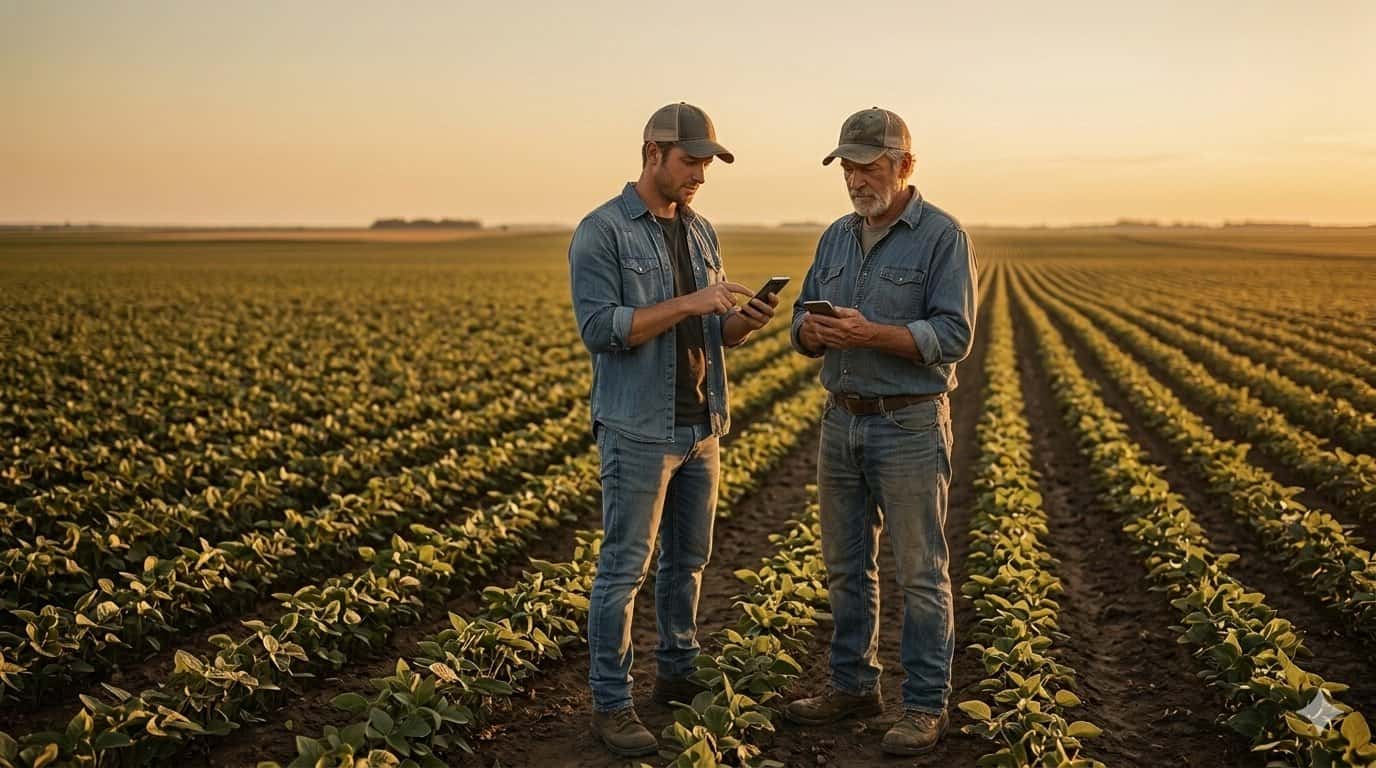
Let’s cut to the chase. You sell seed, chemicals, fertilizer, or equipment inputs and your customers are farmers. Farmers who are busy, skeptical of slick advertising, and have heard every sales pitch in the book. If you want to reach them and get them to pick up the phone or walk through your door. You need to show up in the right places, with the right message, at the right time.
The good news? You don’t need a giant marketing budget to compete. You need a smart one. This blog breaks down the most effective advertising channels for ag input suppliers, from digital tools and trade shows to direct mail and print, so you can stop guessing and start growing.
This Blog in a Snapshot
Here’s what we cover bookmark this and share it with your team:
- Here’s what we cover bookmark this and share it with your team:
- Why knowing where farmers spend their time is your #1 competitive advantage
- The digital channels (SEO, PPC, social media, email, CTV) that actually deliver for ag input suppliers
- Why trade shows and field days still matter and how to make them work harder
- How direct mail and print advertising still punch above their weight in ag marketing
- The secret to combining channels into a marketing mix that builds real pipeline
- Pro tips to make your budget go further without wasting a single dollar
- Frequently Asked Questions about advertising for ag input businesses
First Things First: Know Your Farmer
Before you spend a single dollar on advertising, you need to understand who you’re talking to. Farmers are not a monolithic audience. A 5,000-acre corn and soybean operation in Iowa has very different buying habits than a small, diversified farm in Kentucky.
Here’s what the data tells us about today’s agricultural buyer:
- Approximately 50% of farmers are now comfortable purchasing ag products online, and that number nearly doubles when it’s a product they’ve bought before according to research by McKinney surveying row and specialty crop growers. (Elevation B2B, 2024)
- Farmers are doing their research digitally. According to WebFX, 68% of all online experiences start with a search engine and your farmer customers are no exception.
- Mobile is massive. Over 63% of all web traffic comes from mobile devices (DemandSage, 2024) meaning the farmer you want to reach may be reading about your herbicide options from the cab of their tractor.
The bottom line: the modern farmer is both online and offline. Your advertising strategy needs to be too.
Digital Advertising Channels That Work for Ag Input Suppliers
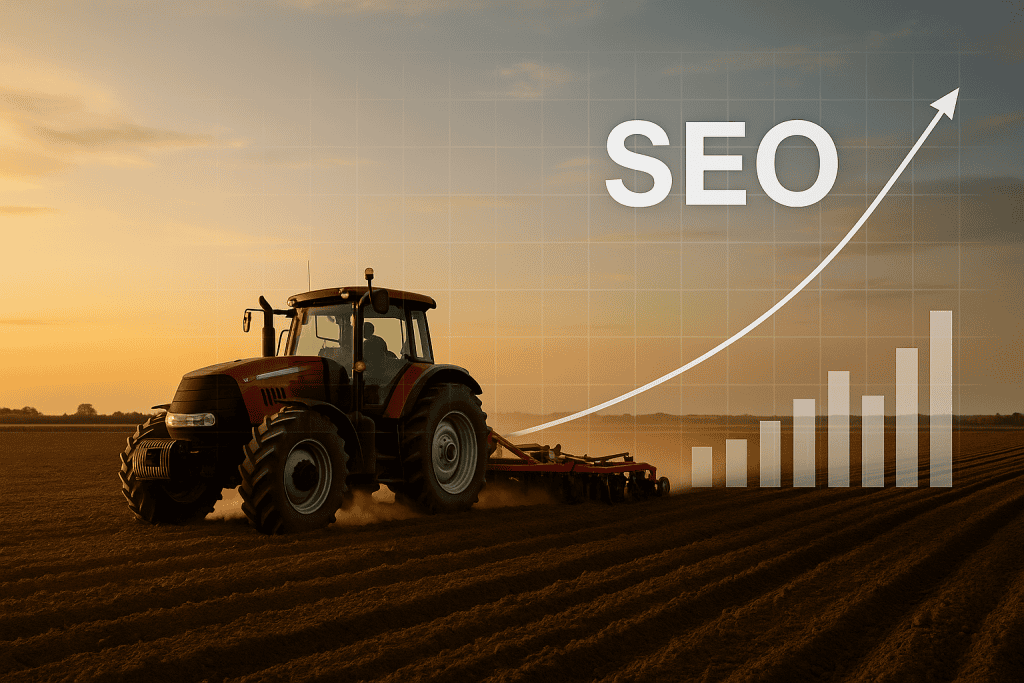
1. Search Engine Optimization (SEO): Get Found When It Counts
When a farmer needs a new herbicide, a seed brand recommendation, or a fertilizer supplier in their county, they’re typing it into Google. If your business doesn’t show up on that first page, your competitor does. It’s that simple.
SEO (search engine optimization) is the process of making your website rank higher in search results for the terms your customers are actively searching. And in ag, the competition for those clicks is still surprisingly light compared to other industries. That’s an opportunity you shouldn’t leave on the table.
What to optimize for: Product pages for each input category (seed, chemical, fertilizer), local search terms (“fertilizer supplier near [your town]”), and educational content that builds trust and authority. Need help? Fastline Marketing Group’s ag SEO services are built specifically for input dealers and ag retailers. Learn more here>
2. Pay-Per-Click Advertising (PPC): Get in Front of the Right Farmer, Right Now
SEO is a long game. PPC is your fast lane. Pay-per-click advertising through Google Ads or other platforms puts your business at the very top of search results for the exact terms your customers are searching, starting the day your campaign launches.
For ag input suppliers, PPC is particularly powerful during peak buying seasons. Planting season, pre-season planning windows, and fall application timing are all moments when farmers are actively researching inputs. A well-timed PPC campaign means your ad shows up exactly when they’re ready to buy.
What makes it even better: you only pay when someone actually clicks your ad. Think Shift’s 2024 Digital Advertising Benchmarks for Agriculture analyzed over 4,000 campaigns targeting North American farmers and found that the ag industry can drive traffic more efficiently than most industries because digital ad competition among ag businesses remains relatively low, making your advertising dollar go further.
3. Social Media Advertising: Meet Farmers Where They Scroll
Think farmers aren’t on social media? Think again. Research from Amra & Elma’s 2025 ag marketing data shows nearly 67% of small farms now use social media platforms to promote their brand and connect with their communities. If they’re using it for their farm they’re using it to discover products and vendors too. This trend extends across the ag industry.
For ag input businesses, here’s where to focus:
- Facebook: Still the dominant platform for farmers, especially those 35 and older. Facebook ads can target users by geography, interests (farming, agriculture), and even behaviors like recent purchase activity.
- YouTube: Short educational videos about your products application tips, product demos, customer testimonials, build trust in a way a text ad never can. According to Elevation B2B, 88% of people say they’ve been convinced to buy a product after watching a brand’s video.
- LinkedIn: If you sell to ag cooperatives, large operations, or commercial growers, LinkedIn ads reach the business-side decision makers.
Pro tip: Don’t try to be everywhere. Pick one or two platforms where your customers are most active and run those well before expanding. Keep in mind each platform might need a different approach or message. So, make sure to optimize your content for those specific platforms.
4. Email Marketing: Your Highest-ROI Digital Channel
Here’s a channel that gets underestimated constantly in ag marketing: email. It’s direct, personal, and it stays in the inbox until someone reads it. For input suppliers, email marketing lets you reach existing customers with seasonal promotions, new product announcements, educational content, and early-order incentives.
Campaign Refinery notes that segmented email campaigns targeting by crop type, farm size, or buying history dramatically improve open rates and conversion compared to blasting one generic message to your entire list.
Ideas for your email campaigns: Pre-season product spotlights, agronomic tips tied to your products, customer success stories, event and field day invitations, and loyalty program updates.
The key is consistency. Monthly or bi-monthly touch-points keep your brand top of mind so when a farmer needs what you sell, you’re the first call they make.
5. Connected TV (CTV): Reach Farmers in the Living Room
CTV advertising streaming ads served through platforms like Hulu, Pluto TV, Peacock, and smart TVs is one of the fastest-growing advertising channels in agriculture. Why? Because you can serve your video ads to a targeted audience of farm households in specific counties, zip codes, or farming regions, and only pay to reach people who actually match your customer profile.
Unlike traditional TV, CTV gives you the targeting precision of digital advertising with the storytelling power of video. For ag input suppliers trying to build brand awareness in a specific region, it’s a powerful tool.
Fastline Marketing Group offers CTV marketing built for the ag market. Learn more here>
Don’t Sleep on Traditional Channels, They Still Deliver
Trade Shows and Farm Field Days: Face-to-Face Still Wins in Ag
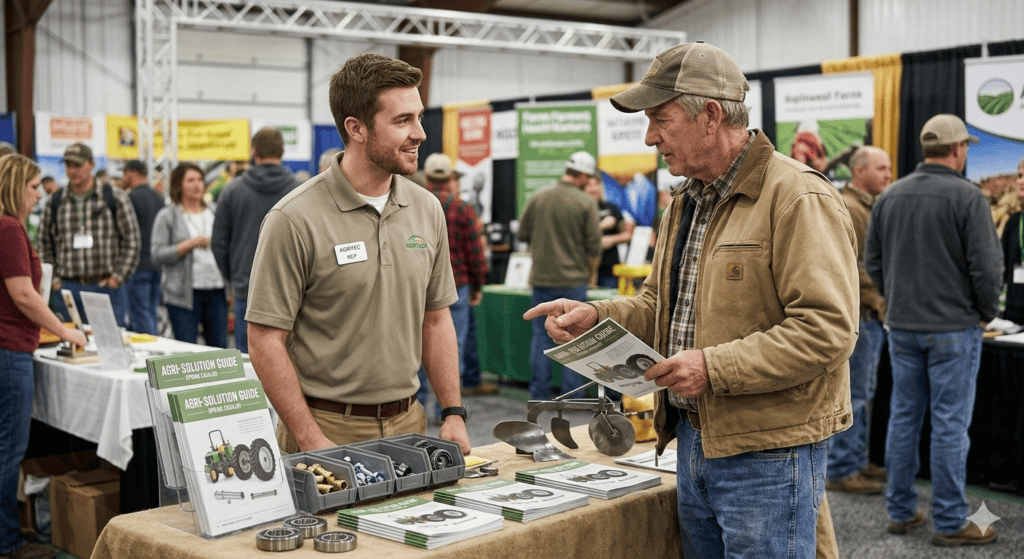
Farming is a relationship business. A handshake and a face-to-face product demo can close more business than a hundred digital ads. That’s why trade shows, ag expos, county farm bureau events, and field days remain a cornerstone of the ag input sales cycle.
According to Farmonaut’s analysis of agriculture advertising strategies, face-to-face marketing at trade events remains a cornerstone for B2B agricultural sales and network expansion, giving input suppliers direct access to distributors, retailers, and farmers who want to see and experience products before they buy.
How to make trade shows work harder:
- Collect email addresses and contact info from every conversation.
- Bring product samples and demonstration materials, not just brochures.
- Follow up within 48 hours most exhibitors never do, and it sets you apart.
- Amplify your attendance on social media before, during, and after the event.
Direct Mail: The Channel That Gets Opened in the Grain Bin
While the rest of the world went all-digital, direct mail quietly became more effective in agriculture because so many competitors abandoned it. A well-designed postcard or mailer landing in a farm mailbox doesn’t compete with 200 unread emails. It gets picked up, looked at, and often tacked to the shop wall.
For input suppliers, direct mail works best when it’s targeted by crop type or geography, seasonal (time your mailers to hit before planting and application windows), and includes a clear call to action a discount, a field day invite, or a QR code linking to your website.
The combination of direct mail with digital retargeting where someone sees your mailer and then gets served your digital ads creates a powerful one-two punch.
Agricultural Print Advertising: Still Relevant, Still Reaching Farmers
Farm Bureau newsletters, local ag publications, co-op member magazines, and regional farming newspapers still have loyal readerships among farmers who’ve been subscribing for decades. Don’t write print off entirely.
The key is placement and relevance. Advertising in a publication your customers actually read and that covers the crops, inputs, and regions you serve delivers a highly targeted audience at a fraction of the cost of mass media. Pair your print ads with a simple digital call to action (a phone number, a web address, or a QR code) so you can track results.
The Magic Is in the Mix: Building a Multi-Channel Strategy
Here’s where most ag input businesses go wrong: they pick one channel and hope for the best. Farming life means farmers encounter your brand in multiple places before they ever pick up the phone. Someone might see your CTV ad, then Google your product, then receive your mailer, then run into you at a field day and that’s when they buy.
Research from Farmonaut confirms what most seasoned marketers know: the most effective advertising strategies blend traditional and digital channels, creating multiple touchpoints that build awareness, trust, and eventually, sales.
A practical multi-channel approach for an ag input supplier might look like this:
| Channel | Purpose |
| SEO | Long-term visibility when farmers search for your products |
| PPC (Google Ads) | Immediate traffic during peak buying seasons |
| Email Marketing | Nurture existing customers and keep you top of mind |
| Social Media Ads | Brand awareness and audience building in your region |
| CTV Advertising | Video storytelling targeted to farm households |
| Direct Mail | High-impact touchpoints for key seasonal windows |
| Trade Shows / Field Days | Relationship-building and product demonstration |
| Print (Trade Publications) | Reaching loyal ag publication readers in your market |
You don’t need to run all eight at once. Start with two or three that align with your budget and where your best customers are most active then build from there.
Pro Tips to Make Every Dollar Count
- Track everything. If you can’t measure it, you can’t improve it. Set up Google Analytics, use UTM codes on digital ads, and ask new customers how they heard about you.
- Be seasonal. Align your advertising spend with when farmers are actually in buying mode pre-planting, pre-application, and fall planning windows are your highest-impact periods.
- Retarget your website visitors. Most people who visit your website don’t convert on the first visit. Retargeting ads follow those visitors around the internet, keeping your brand visible until they’re ready to buy.
- Use your customer list. Upload your existing customer list to Facebook or Google to create lookalike audiences new prospects who share the same characteristics as your best customers.
- Get on Google Business Profile. It’s free, and it ensures your business shows up on Google Maps and local searches. For input suppliers with a physical location, this is non-negotiable.
Ready to Put Your Advertising to Work?
You know your products. You know your market. You just need the right marketing strategy to connect the two and actually reach the farmers who need what you sell.
At Fastline Marketing Group, we specialize in helping ag input dealers, seed companies, chemical suppliers, and equipment manufacturers get more customers with less guesswork. We build simple, effective marketing plans that work online and off.
Ready to grow? Schedule a call with our team today at
fastlinemarketinggroup.com/contact-us or call (877) 338-1209.
Frequently Asked Questions
What is the most effective advertising channel for ag input suppliers?
There is no single “best” channel the most effective strategy combines multiple touch-points. For digital, SEO and PPC provide the strongest, most measurable return for input suppliers. For offline, trade shows and direct mail consistently outperform other traditional channels in agriculture. The combination of digital and traditional is almost always stronger than either alone.
How do I reach farmers with digital marketing?
Meet farmers where they search and scroll. Start with Google SEO and paid search so your business appears when farmers look for inputs online. Layer in Facebook advertising for broader awareness, email marketing for your existing customer base, and CTV if you want to reach farm households via streaming platforms. Mobile optimization is critical — most farmers are accessing information from their phones.
Do farmers actually respond to digital advertising?
Yes, and the numbers back it up. Research cited by Elevation B2B found that approximately 50% of farmers are comfortable purchasing ag products online, and that number grows significantly for repeat purchases. Digital engagement in agriculture has increased steadily over the past several years, especially among younger farm operators and managers.
How much should an ag input business spend on advertising?
This varies widely based on your size, region, and goals. Smaller input dealers often start with a budget of a few hundred dollars per month on digital ads and scale from there based on results. A comprehensive marketing plan including SEO, email, social, and occasional print or direct mail can be executed effectively for most ag input businesses. The key is tracking ROI and reinvesting in what works. An ag marketing specialist can help you determine the right budget for your market.
Is trade show marketing still worth it for ag input businesses?
Absolutely, especially for products that benefit from hands-on demonstration or that require trust before purchase. Trade shows and field days provide relationship-building opportunities that digital channels simply cannot replicate. They’re most valuable when combined with strong digital follow-up: collect contacts at the event, then re-target those prospects digitally afterward.
What is CTV advertising and how does it work for ag?
Connected TV (CTV) advertising refers to video ads served through streaming platforms — think Hulu, Pluto TV, and smart TV apps. What makes it valuable for ag input businesses is targeting: you can serve your video ad specifically to farming households in your region or state, rather than paying for a broad traditional TV audience. It’s the storytelling power of television with the precision of digital advertising.
How can I advertise my ag input business on a limited budget?
Focus first on your Google Business Profile (free), your website SEO (high long-term ROI), and email marketing to your existing customer list (very low cost). From there, add targeted Google PPC during your peak buying season for immediate visibility. Avoid spreading a small budget too thin — two channels done well beat six channels done poorly every time.
Cited Sources
The following sources were consulted in the development of this article. Fastline Marketing Group makes no claim of affiliation with these organizations and cites them solely for informational attribution.
- Amra & Elma LLC. (2025). Top 20 Farm Marketing Statistics 2025. https://www.amraandelma.com/farm-marketing-statistics/
- Campaign Refinery. (2024). 5 Actionable Strategies to Improve Your Agriculture Email Marketing. https://campaignrefinery.com/agriculture-email-marketing/
- Elevation B2B. (2024). How to Succeed at Digital Marketing for Agriculture Companies. https://elevationb2b.com/blog/how-agriculture-companies-can-see-success-with-digital-marketing/
- Farmonaut. (2024). Best Agriculture Advertising: 7 Top Strategies 2025. https://farmonaut.com/blogs/best-agriculture-advertising-7-top-strategies-2025
- Farmonaut. (2024). Digital Marketing of Agricultural Products: 2024 Trends. https://farmonaut.com/blogs/digital-marketing-of-agricultural-products-2024-trends
- Farmonaut. (2024). Marketing for Agriculture: 7 Shocking Digital Trends 2024. https://farmonaut.com/blogs/marketing-for-agriculture-7-shocking-trends-for-2024
- Softtrix. (2024). Digital Marketing Strategies for Agriculture Businesses 2024. https://www.softtrix.com/blog/effective-digital-marketing-strategies-for-agriculture-businesses-2024/
- Think Shift. (2024). 2024 Digital Advertising Benchmarks for Agriculture. https://thinkshiftinc.com/blog/2024-digital-advertising-benchmarks-for-agriculture
- WebFX. (2025). 100+ Must-Know Digital Marketing Statistics for 2025. https://www.webfx.com/digital-marketing/statistics/
